Bedding · Textile guide
How to Evaluate Affordable Throws: Fiber, Weight, and Care
A throw earns its place through more than a pleasing price or an appealing shade. Fiber, weave, weight, finishing, and care all shape how it feels, how it performs, and how long it remains part of a room. Here’s how to assess the details before choosing a practical layer for a sofa, bedroom, or changing season.
Begin with the way you’ll use it
A throw may be an everyday companion for the sofa, an extra layer at the foot of a bed, or a lightweight cover to keep nearby when the evening cools. Those uses call for different qualities. A blanket that will be handled daily benefits from resilient construction and straightforward laundering. A decorative layer may put more emphasis on drape, color, or a distinctive texture. For travel or warm-weather use, compactness and breathability may matter more than substantial insulation.
Before comparing labels, picture the throw in its intended setting. Will it be shared by several people? Does it need to withstand pets, frequent washing, or a busy household? Is it for a cool bedroom, a drafty living room, or a mild climate where a heavy blanket would rarely be comfortable? A clear answer narrows the field and helps distinguish useful value from a low initial cost that may come with unsuitable care requirements.
It can also help to consider who will use it. Sensitive skin may favor a smooth, soft surface, while someone who runs warm may prefer a breathable, lighter weave. If the throw is meant for a child or infant, follow age-appropriate safe-sleep guidance: loose blankets should not be placed in an infant’s sleep space. A textile’s softness or fiber content does not override safe-sleep recommendations.
Read the fiber label, not just the front label
Fiber content is one of the clearest clues to a throw’s likely feel and upkeep, but no single fiber is best for every home. Look for the actual composition, including percentages where the fabric is blended. Marketing terms such as “cozy,” “natural,” or “soft-touch” describe an impression, not a complete account of what the textile is made from.
Cotton: breathable and familiar
Cotton is a common choice for throws because it feels familiar, is generally breathable, and is often available in machine-washable constructions. It can be woven into a wide range of surfaces, from smooth plain weaves to textured waffle, twill, or jacquard patterns. The structure and yarn matter: two cotton throws may differ considerably in weight, softness, and warmth.
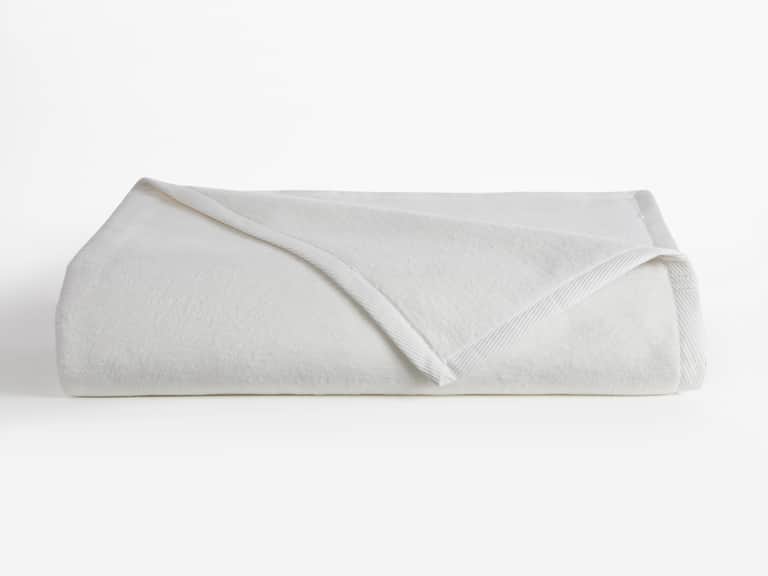
For an everyday layer, check whether the care instructions suit your laundry routine and whether the fabric is likely to shrink. A gentle wash and lower-temperature drying may help preserve shape and texture, but the product label should guide care. The Allegra Blanket, for example, is described as a 100% cotton, stonewashed twill with a lightweight feel and machine-wash care instructions. It illustrates how fiber, weave, and finishing work together; it is not a substitute for comparing the dimensions and care label of any throw you are considering.
Wool and alpaca: warmth without relying on bulk
Wool fibers can trap air and provide insulation, so a wool throw may feel warm without needing to be exceptionally thick. Alpaca is another animal fiber valued for a soft hand and insulating character. Individual products vary, however, and warmth is affected by yarn, weave, density, and finishing—not simply the word “wool” on a label.
Care is an important part of the calculation. Some wool and alpaca textiles call for specialist cleaning, while others have different instructions. If professional care is inconvenient or costly, a beautiful fiber may prove impractical for a frequently used household throw. Consider whether the texture suits your skin, whether shedding or surface change is a concern, and how you will store it between seasons.
Blends and manufactured fibers: check the proportions
Blends can combine properties, such as a natural fiber’s familiar hand with another fiber’s durability or ease of care. They may also be selected for price, color consistency, or a particular surface effect. The word “blend” alone does not tell you whether the result will be softer, longer-lasting, or easier to wash. Look for the percentages and follow the stated care directions.
For any fiber, quality is not guaranteed by a natural origin or a premium-sounding description. A well-made textile should be judged by its construction, finish, performance in the intended setting, and the information available about its materials. When details are missing, treat that uncertainty as part of the decision.
Understand weight, warmth, and drape
Weight affects how a throw feels over the body and how it hangs over furniture. A lightweight blanket is easier to fold, carry, and layer; it can suit transitional weather or warm rooms. A denser or heavier textile may feel more substantial and provide greater warmth, although warmth also depends on the fiber and weave. A thick-looking surface is not necessarily the warmest, and a thin blanket is not automatically cool.
When specifications are available, fabric weight may be listed in grams per square metre (g/m²). It offers a useful point of comparison between textiles, but it is not a universal warmth rating. Weave openness, loft, fiber type, and finishing all influence how a blanket performs. Compare similar constructions where possible, and use weight as one clue rather than a verdict.
Think about drape as well as warmth. A supple throw settles easily over a chair or the end of a bed; a more structured fabric may hold a crisp fold and show off its texture. If you can inspect the textile in person, notice whether it feels balanced in the hand, whether it pulls or twists, and whether the edges lie flat. When shopping from a description, dimensions and construction details offer a more reliable picture than adjectives alone.
- For warm rooms or summer layering: consider a lighter, breathable construction that does not feel cumbersome.
- For cooler evenings: look for an insulating fiber or a denser weave, then confirm that the care requirements fit your routine.
- For a sofa or armchair: check that the size gives enough coverage without dragging excessively on the floor.
- For a bed layer: compare the throw’s dimensions with the bed and decide whether you want a narrow accent or broader coverage.
Look closely at weave and finishing
Weave affects texture, airflow, durability, and visual character. A plain weave often has a clean, versatile surface. Twill can create diagonal texture and a fluid drape. Waffle constructions form raised cells that add dimension and may allow more airflow than a dense, smooth surface. Jacquard patterns are woven into the fabric rather than simply printed on top. These names describe construction, not a guarantee of comfort or longevity, so consider them alongside the fiber and intended use.
Finishing details deserve attention because edges are handled often and may be vulnerable to wear. A turned hem, woven binding, blanket stitch, fringe, or selvedge each gives the textile a different appearance and finish. Check that seams are even, edges feel secure, and any fringe is tidy. Loose threads are not always a sign of failure, but visibly weak stitching or uneven edges can signal that a throw may not stand up well to regular use.
Pre-washing and pre-shrinking can influence how a blanket feels when new and how it behaves after laundering, but they do not eliminate the need to follow care instructions. Color and texture may also change with washing, especially for darker shades or brushed surfaces. If the maker advises washing dark colors separately or removing the textile while damp, those are practical details—not decorative fine print.
Care is part of the real cost
A low purchase price is only one part of affordability. A throw that needs specialist cleaning, careful storage, or repeated repairs may be more demanding over time than a machine-washable option. Conversely, a delicate textile may be worthwhile if it is used occasionally and its particular feel or appearance is important to you. The right choice depends on the balance between use and upkeep.
Before choosing, read the full care label. Check water temperature, cycle, drying method, bleach restrictions, and whether fabric softener is discouraged. Different fibers and finishes respond differently to heat, agitation, and detergents. Do not assume that a blanket is washable because its fiber is cotton, or that a wool blanket must be dry-cleaned; use the instructions for the specific textile.
For machine-washable throws, a gentle cycle and low-temperature drying are common directions, but they are not universal. Avoid overloading the machine, which can prevent a large textile from rinsing properly, and make sure it is fully dry before storing. For throws that require professional care, factor in the time and expense of that service. A care routine you can realistically maintain is more valuable than an ideal routine you are unlikely to follow.
Regular maintenance need not be complicated. Shake out crumbs and dust, address spills promptly according to the care label, and rotate a frequently used throw so one area does not receive all the wear. Store clean, dry textiles in a breathable place away from prolonged dampness. These modest habits help preserve appearance and comfort without replacing the need for appropriate cleaning.
Assess value without confusing it with “cheap”
Affordable does not have to mean disposable. A useful throw offers the qualities you need at a cost that fits your budget, with no unnecessary features that will go unused. Instead of comparing prices in isolation, consider the fiber, dimensions, construction, expected frequency of use, and care costs together. A durable, easy-care cotton throw may represent better value for a busy household than a more delicate textile that spends most of its life stored away.
Be cautious with claims that sound precise but are not explained. “Eco-friendly,” “hypoallergenic,” and “chemical-free” can be broad or ambiguous descriptions. If environmental sourcing or certification matters to you, seek the name of the standard and confirm what it covers. Fiber content, country of origin, and certification are separate facts; none alone answers every question about a product’s full supply chain or performance.
Also look for clear practical information: measurements, fiber percentages, weave or construction, and complete care instructions. If the listing gives only a color and a general promise of softness, it is difficult to assess whether the throw suits your needs. Transparent product details help you compare like with like and reduce the chance of buying based on appearance alone.
A simple comparison checklist
When you have narrowed your options, use this short checklist to make the final comparison more deliberate:
- Use: Is it intended for daily lounging, occasional layering, or mainly display?
- Fiber: Are the materials and percentages clearly stated?
- Feel: Does the texture suit your preferences and the season?
- Weight: Is it light enough to layer, or substantial enough for the warmth you want?
- Construction: Are the weave, seams, and edges appropriate for the amount of handling it will receive?
- Size: Does it cover the intended seat or bed area without being awkward to store?
- Care: Can you follow the washing or cleaning instructions consistently?
- Value: Does the combination of usefulness, maintenance, and expected wear justify the cost for you?
This method keeps the decision grounded in function while leaving room for personal taste. Color and pattern matter: a throw should feel at home in the room. But a pleasing palette works best when it is paired with a textile that behaves well in everyday life.
The quiet intelligence of a good layer
The best affordable throws are not necessarily the thinnest, simplest, or least expensive. They are the ones whose materials, weight, construction, and care needs make sense for the way you live. Cotton may be a practical choice for breathable, regular use; wool or alpaca may suit a desire for insulating warmth with a lighter feel; a blend may meet a particular balance of softness and upkeep. Each option has trade-offs worth understanding before it comes home.
Take a moment to read beyond the headline description. Compare the fiber label, imagine the throw in its real setting, and consider the care routine as part of ownership. With those details in view, choosing a throw becomes less about guessing from a photograph and more about selecting a textile that is comfortable, useful, and likely to earn its place season after season.